
How We Learn “Manhood”
Every man grows up with his own experiences and beliefs about what it means to “be a man.” Gender identity is just one piece of who we are—alongside race, ethnicity, sexual orientation, culture, religion, family, disability, community, lived experiences, and many other factors—but it can shape how men see themselves and how they move through the world.
While every man is unique, many men grow up with common expectations about how they should act, think, or feel.
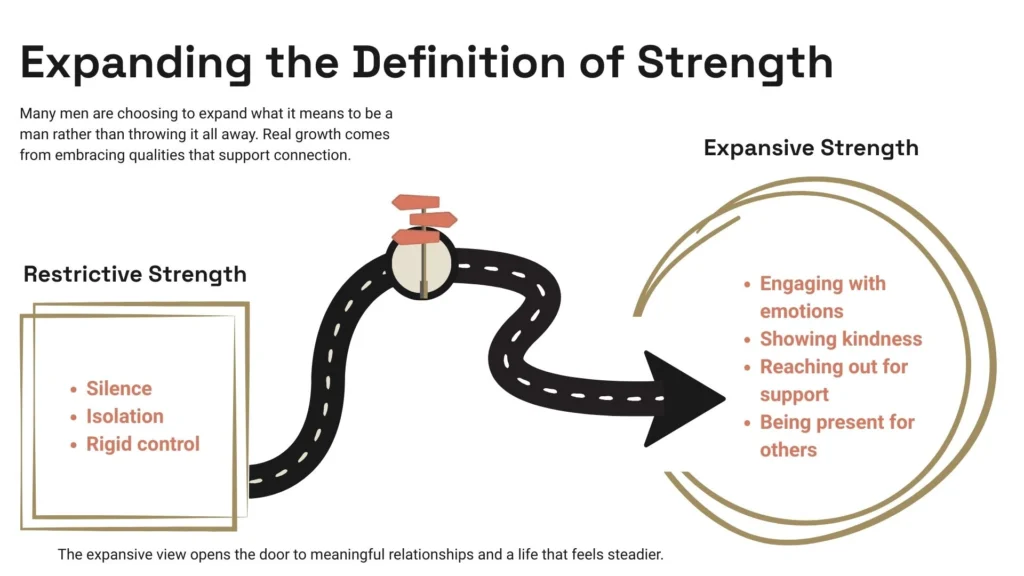
- Handle problems alone
- Appear in control
- Limit emotional expression
- Avoid showing vulnerability
In some situations—like moments of crisis or in certain jobs—being stoic and controlled may be helpful. But when those expectations become rigid or locked in 24/7, they can make life much harder.
When Expectations Become Restrictive
For many men, especially those who’ve experienced childhood trauma or abuse, these expectations can become walls.

- Pretend that everything is fine all the time
- Deal with struggles alone
- Avoid talking about what they’re going through
- Judge themselves harshly, including for “not coping” or “measuring up”
When emotional expression is limited, connection becomes harder. Many men describe years of “stuffing things down,” afraid that if they open up even a little, everything will spill out. That pressure can build until it feels overwhelming, like a pot boiling over.
During times when understanding, compassion, and support would help most, these beliefs about manhood can leave men feeling isolated and unsure where to turn.
Expanding What Strength Looks Like
The good news is that many men today are thinking through what it means to be a man, expanding the definition rather than replacing it, and embracing qualities that support real growth and connection, such as:
- Engaging with their emotions
- Showing kindness and compassion
- Acknowledging vulnerability, mistakes, and struggles
- Reaching out for support when needed
- Being present for others
Taking a more expansive view can help you build strength, deepen your connections, and face challenges with more ease, opening the door to more meaningful relationships and a life that feels steadier and more fulfilling.
If you want to explore this further, check out our Understanding & Managing Emotions article and podcast.
Disclaimer: The information on this page is general in nature and is not a substitute for professional advice. We encourage you to prioritize your safety and well-being and to consider seeking support from a qualified healthcare professional if needed.